trainee5's blog

(Download) UPSC MAIN EXAM : 2026 BOTANY (Paper-2)


(Download) CS (MAIN) EXAM:2026 Botany (Paper II)


  • Exam Name: CS (MAIN) EXAM:2026 Botany (Paper II)

  • Marks: 250

  • Time Allowed : Three Hours

खण्ड - A / SECTION — A 

1. Answer the following questions in about 150 words each : 10×5=50 

  • (a) Frame Shift mutation

  • (b) Lampbrush chromosome and its significance

  • (c) Reporter genes

  • (d) Cell signalling and Cell receptors

  • (e) DNA finger printing

2.

  • (a) Give a detailed account on sex linked inheritance? (20)

  • (b) Explain the structural variations of chromosomes and their significance. (15)

  • (c) Describe the role of Biochemical and Molecular basis of Mutation. (15)

3.

(a)

  • (i) Write in detail the chemical composition of microtubules. (10)

  • (ii) Elaborate the functions of cytoplasmic microtubules. (10)

(b) Explain the different means of passive transport across the plasma membrane. (15)

(c)

  • (i) Elaborate on the significance of molecular markers. (8)

  • (ii) Explain the significance of polyploidy in Agriculture. (7)

4.

  • (a) Discuss on the tools and techniques involved in PCR and FISH. (20)

  • (b) Explain the causes of Heterosis and its impact in Agriculture. (15)

  • (c) Describe the various evidences supporting organic evolution. (15)

खण्ड - B / SECTION —— B

5. Answer the following questions in about 150 words each :10 × 5 = 50 

  • (a) Munch hypothesis

  • (b) Correlation and Regression

  • (c) Heat Shock Proteins (HSP's)

  • (d) Biogeochemical cycle

  • (e) Regulation of NIF genes

6.

  • (a)

    • (i) Explain the significance of Nod factors and the process of root nodule formation. (10)

    • (ii) Describe the process of amino acid biosynthesis in nitrogen metabolism. (10)

  • (b) Differentiate between photophosphorylation and oxidative phosphorylation. (15)

  • (c) Discuss the biochemical and physiological changes during the process of fruit ripening. (15)

7.

(a)

  • (i) Explain the factors affecting enzyme activity. (10)

  • (ii) Describe the mechanism of enzyme action. (10)

(b) Explain the following:

  • (i) Acid rain (5)

  • (ii) Biocide as pollutant (5)

  • (iii) Photochemical smog (5)

(c)

  • (i) Describe seed dormancy and explain how is it getting regulated? (8)

  • (ii) Explain biochemical changes taking place during the seed germination. (7)

8.

(a)

  • (i) What is the basic concept of phytogeography? (5)

  • (ii) Give a detailed account on various phytogeographical regions of India. (15)

  • (b) Give an account on farmers rights and intellectual property rights. (15)

  • (c) Discuss on the present status of forest resources of India. Give the factors responsible for deforestation. (15)

DOWNLOAD 10 YEARS UPSC MAINS BOTANY OPTIONAL PAPERS PDF

DOWNLOAD UPSC MAINS G.S. (1-4) SOLVED PAPERS PDF

DOWNLOAD UPSC MAINS G.S. 10 Year PAPERS PDF

DOWNLOAD UPSC IAS EXAMS E-BOOKS PDF

UPSC Mains General Studies Study Kit

<<< Go back to Main page

(Download) UPSC MAIN EXAM : 2026 BOTANY (Paper-1)


(Download) CS (MAIN) EXAM:2026 Botany (Paper I)


  • Exam Name: CS (MAIN) EXAM:2026 Botany (Paper I)

  • Marks: 250

  • Time Allowed : Three Hours

खण्ड - A / SECTION — A 

1. Answer the following questions in about 150 words each : 10×5=50 

  • (a) Blue-green algae are also considered as bacteria. Discuss their major similarities with bacteria.

  • (b) What do you mean by virus of bacteria? Describe their application in medical sciences.

  • (c) Describe mineralization, symbiotic and non-symbiotic nitrogen fixation. How do they help in improving the soil quality for agriculture?

  • (d) Define fossilization. Discuss the major types of fossils that occur in nature.

  • (e) What is chemotaxonomy? Analyze how chemical evidence contributes to solving taxonomic problems in plant classification.

2.

  • (a) What are the major characteristics of Anthocerotopsida? Describe the gametophytic and sporophytic generations of Anthoceros. (20)

  • (b) Describe the salient features and economic importance of Laminariales. (15)

  • (c) Compare the ovule-bearing structures of Cycas and Pinus with the help of labelled diagrams. (15)

3.

  • (a) Name the organism that causes stalk rot disease in maize. Describe its symptoms, disease cycle, control and management. (20)

  • (b) What are Mycoplasmas? How do they differ from spheroplast and protoplast? Describe their salient features. (15)

  • (c) Write a note on geological time scale. Briefly discuss the plant life in each era. (15)

4.

  • (a) Explain the APG IV classification. State briefly how it differs from existing classifications. Discuss its merits and demerits. (20)

  • (b) Describe in brief the major strategies adopted for plant disease control and management. (15)

  • (c) Compare the sporophyte of Psilotum and Equisetum. (15)

खण्ड - B / SECTION —— B

5. Answer the following questions in about 150 words each :10 × 5 = 50 

(a) Describe the androecium of Orchidaceae and Asclepiadaceae. Highlight the differences between them.

(b) Discuss the different types of polyembryony in plants and add a note on its importance.

(c) Write the botanical names and families of the following economically important plants:

  • (i) Pearl millet

  • (ii) Flax

  • (iii) Pomegranate

  • (iv) Bottle gourd

  • (v) Chickpea

  • (d) Give a detailed account on cell suspension culture and its significance.

  • (e) Write an explanatory note on the history of plant domestication.

6.

  • (a) Mention the diagnostic features of family Apiaceae and Solanaceae. Write the botanical names and uses of five members from each family. (20)

  • (b) "Botanical gardens are considered as outdoor laboratories for botanists." Substantiate the statement. (15)

  • (c) Describe the components of xylem tissue in plants. What is its role in plant survival and growth? (15)

7.

  • (a) Briefly explain the method of herbaria preparation. What is its role in modern taxonomic research? (20)

  • (b) Write an account on types, regulation and significance of totipotency. (15)

  • (c) Write an account on haploid plant production through tissue culture. What are the advantages of homozygous diploid lines? (15)

8.

  • (a) What is the role played by media and growth regulators in micropropagation? How to control exudation and contamination problems during micropropagation? (20)

  • (b) Describe the techniques used in experimental embryology. (15)

  • (c) Give an outline on the history and progress of ethnobotanical research in India. (15)

DOWNLOAD 10 YEARS UPSC MAINS BOTANY OPTIONAL PAPERS PDF

DOWNLOAD UPSC MAINS G.S. (1-4) SOLVED PAPERS PDF

DOWNLOAD UPSC MAINS G.S. 10 Year PAPERS PDF

DOWNLOAD UPSC IAS EXAMS E-BOOKS PDF

UPSC Mains General Studies Study Kit

<<< Go back to Main page

(Download) UPSC MAIN EXAM : 2026 ANTHROPOLOGY (Paper-2)


(Download) CS (MAIN) EXAM : 2026 ANTHROPOLOGY (Paper-2)

  • Exam Name: CS (MAIN) EXAM:2026 ANTHROPOL0GY (Paper II)

  • Marks: 250

  • Time Allowed : Three Hours

खण्ड - A / SECTION —A 

1.Write notes on the following in about 150 words each : 10×5=50

  • (a) Dravidian language family and its tribal speakers. (10)
  • (b) Seed Eaters Model of hominid differentiation. (10)
  • (c) Tana Bhagat movement. (10)
  • (d) Particularly Vulnerable Tribal Group (PVTG) of the islands. (10)
  • (e) Kumar Suresh Singh’s contribution in studying tribal movements. (10)

2. (a) What are the major debates related to the concept of jajmani system? (20)

2. (b) ‘Dharti Aaba Janjatiya Gram Utkarsh Abhiyan aims to meet some of the Sustainable Development Goals’. Discuss. (15)

2. (c) What are the evidences available regarding crops and domesticated animals of Indus Valley Civilization? What are the views of the scholars regarding Indus script? (15)

3. (a) Critically examine the salience of F. G. Bailey’s study on Bisipara village of Odisha. (20)

3. (b) Discuss the impact of Christianity on the tribal population of Jharkhand. (15)

3. (c) Discuss with examples, how general comparative analogy has been used for ethnoarchaeological studies in India. (15)

4. (a) Write an account on the contribution of Verrier Elwin in developing policies for the tribal populations in post-independent India. (20)

4. (b) Why the classifications of Indian populations, based on somatometric and somatoscopic characteristics failed to develop a common understanding of the population diversity? (15)

4. (c) Make a critical appraisal of Niyamgiri movement against mining-induced displacement. (15)

खण्ड - B / SECTION — B 

5. Write notes on the following in about 150 words each :10 × 5 = 50 

  • (a) Buddhist tribes of India. (10)
  • (b) Debate regarding the phylogenetic position of Narmada Man. (10)
  • (c) Article 371A of the Indian Constitution. (10)
  • (d) Nature-Man-Spirit-Complex. (10)
  • (e) Contribution of L. K. Ananthakrishna Iyer in Anthropology. (10)

6. (a) Make a critical appraisal of the mesolithic culture of Ganga basin with reference to artifacts, faunal and human skeletal remains excavated from different sites. (20)

6. (b) Discuss the impact of democratic institutions on the tribal populations of India. (15)

6. (c) Write an account on the prevalence of sickle cell disease among the tribal populations of India. What are the initiatives undertaken by the affected states to tackle with this disease? (15)

7. (a) Assess the contribution of colonial scholars in studying the tribal populations of North-East India. (20)

7. (b) Does caste as a social category exist among the non-Hindu communities in India? Illustrate your answer with suitable examples. (15)

7. (c) Write an account on Development Action Plan for Scheduled Tribes (DAPST). (15)

8. (a) Make a critical appraisal of Surajit Sinha’s line of argument that tribes and castes may not be isolated social categories, but are a part of the great Indian civilization. (20)

8. (b) What are the major challenges tribal communities are facing in contemporary India? (15)

8. (c) What are the provisions given in the Constitution of India for the safeguard of the Scheduled Caste populations? (15)

(Download) UPSC MAIN EXAM : 2026 ANTHROPOLOGY (Paper-1)


(Download) CS (MAIN) EXAM : 2026 ANTHROPOLOGY (Paper-1)

  • Exam Name: CS (MAIN) EXAM:2026 ANTHROPOL0GY (Paper I)

  • Marks: 250

  • Time Allowed : Three Hours

खण्ड - A / SECTION —A 

1.Write notes on the following in about 150 words each : 10×5=50

(a) Health as a cultural construct

(b) Canalization and catch-up growth

(c) Myth as oral literature

(d) Genetic polymorphism and natural selection

(e) Ethnoarchaeology and classical archaeology

2.

  • (a) What is meant by a somatotype? Discuss the Heath-Carter anthropometric method, giving its advantages over that of Sheldon's method. How can somatotyping be applied in sports sciences? (20)

  • (b) How do religious beliefs help people to devise cultural mechanisms to adapt to their environment? Discuss in detail with appropriate examples. (15)

  • (c) How is the theory of structuralism helpful in understanding the concepts of caste and gender? (15)

3.

  • (a) How do the concepts of power, authority, legitimacy and social control change with changing political organization? Discuss in detail giving suitable examples. (20)

  • (b) Human evolution is a product of both biological and cultural factors. Elaborate. (15)

  • (c) Give the distribution of Palaeolithic sites around the Himalayan and Sub-Himalayan areas, highlighting the typo-technologies of the tools. (15)

4.

  • (a) Discuss the phylogenetic status, characteristic features, geographical distribution and lifeways of Paranthropus. (20)

  • (b) Discuss 'incest taboo' as the basis of development of kinship systems in human societies. (15)

  • (c) Numerical chromosomal aberrations can be due to abnormalities in autosomes as well as sex chromosomes. Elaborate in terms of the effects these have on human body, giving suitable examples. (15)

खण्ड - B / SECTION — B 

5. Write notes on the following in about 150 words each :10 × 5 = 50 

  • (a) Ethics in anthropological fieldwork

  • (b) Distinguishing features of nuclear and mitochondrial DNA

  • (c) Feminist movement and family

  • (d) Anthropometry in ergonomics

  • (e) Thermoluminescence dating method

6.

  • (a) How would you find out that a particular disease/disorder is inherited and, if so, in which manner? Elaborate with suitable examples. (20)

  • (b) Critically discuss how culture determines human behaviour in the light of Leslie White's theory. (15)

  • (c) What are Strepsirhini Primates? Describe their geographical distribution and mention the characteristics that distinguish them from Haplorhini Primates. (15)

7.

  • (a) Discuss the mixed method approach in anthropological research. (20)

  • (b) What do you understand by fertility and mortality? How are these influenced by biological and socio-ecological factors? (15)

  • (c) Write a detailed note on the characteristic features, chronology, geographical distribution, tool types and lifeways of Magdalenian cultural tradition of Europe. (15)

8.

  • (a) Compare Edmund Leach's structuralism with interpretive anthropology of Clifford Geertz. (20)

  • (b) In what manner is our understanding of serogenetics and cytogenetics useful in reproductive biology? What are the major ethical issues involved in reproductive technology? (15)

  • (c) Discuss, with appropriate examples, how basic personality types may lead towards building up of national character. (15)

(Download) UPSC MAIN EXAM : 2026 ANIMAL HUSBANDRY (Paper-2)


(Download) CS (MAIN) EXAM:2026 Animal Husbandry (Paper -II)

  • Exam Name: CS (MAIN) EXAM:2026  Animal Husbandry (Paper II)

  • Marks: 250

  • Time Allowed : Three Hours

खण्ड -A / SECTION — A 

1. Discuss the following in about 150 words each : 10×5=50

 (a) Paranasal sinuses and their functions in ox. (10)

 (b) Use of electron microscopy in the study of tissue structure and cytology. (10)

 (c) Autacoids and their classification. (10)

 (d) Porcine stress syndrome. (10)

 (e) Key aspects of regional anaesthesia in dogs. (10)

Q2.(a) Enlist the cranial nerves of bovines. Discuss the origin, distribution and functions of the vagus nerve. (20)

(b) Explain the principles of chemotherapy for neoplastic diseases in animals. (15)

(c) Briefly describe the etiology, pathogenesis, clinical findings, diagnosis and treatment of meningitis in cattle. (15)

Q3.(a) Enlist the major sources of Vitamin A and its deficiency symptoms in newborn calves, lambs and piglets. What are the factors that interfere with Vitamin A utilization in animals? (20)

(b) Explain the anatomical features of the digestive system of fowl along with a diagram. Describe the functional anatomy of the crop and gizzard in detail. (20)

(c) Discuss the requirements for the establishment of animal health centres in rural areas. (10)

Q4.(a) Give a detailed account of the impact of water, air and soil pollution on animal health and production. (20)

(b) Explain the conditions resulting in dehydration in animals. Write its pathogenesis, clinical symptoms and line of treatment. (15)

(c) Discuss the use of chemoprophylaxis for controlling bacterial, parasitic and vector-borne diseases in animals, along with its advantages and limitations. (15)

खण्ड - B / SECTION — B 

5. Discuss the following in about 150 words each : 10×5=50 

(a) Role of animals and birds in the propagation of zoonotic diseases in humans. (10)

(b) Preparation and nutritive value of Shrikhand. (10)

(c) Classification and processing of animal casings. (10)

(d) Preparation of meat emulsion and precautions required during the process. (10)

(e) Disposal and utilization of rabbit fur. (10)

Q6.(a) Describe the processing of yoghurt and cultured buttermilk along with flow diagrams. (20)

(b) Discuss the role of the WTO in implementation of sanitary and phytosanitary measures related to milk and meat products. (15)

(c) Elaborate the functions of different curing ingredients used in meat processing. Write down the advantages and limitations of various curing methods. (15)

Q7.(a) Describe the procedure for conducting post-mortem examination of a cow in a vetero-legal case. (20)

(b) Give a detailed account of processing of Cheddar cheese with a flow diagram and write its nutritive value. (20)

(c) What are the uses of animal organs and glandular by-products for food and pharmaceuticals? (10)

Q8.(a) Differentiate between a service abattoir and a commercial abattoir. Write down the general principles for efficient abattoir management in Indian conditions. (20)

(b) Describe the measures to be adopted for production and handling of hygienic meat from farm to fork. (15)

(c) Discuss the methods of preservation of shell as well as broken-out/liquid eggs. (15)

DOWNLOAD 10 YEARS UPSC MAINS ANIMAL HUSBANDRY AND VETERINARY SCIENCE PAPERS PDF

DOWNLOAD UPSC MAINS G.S. (1-4) SOLVED PAPERS PDF

DOWNLOAD UPSC MAINS G.S. 10 Year PAPERS PDF

DOWNLOAD UPSC IAS EXAMS E-BOOKS PDF

UPSC Mains General Studies Study Kit

(Download) UPSC MAIN EXAM : 2026 ANIMAL HUSBANDRY (Paper-1)


(Download) CS (MAIN) EXAM:2026 Animal Husbandry (Paper -I)

  • Exam Name: CS (MAIN) EXAM:2026  Animal Husbandry (Paper I)

  • Marks: 250

  • Time Allowed : Three Hours

खण्ड 'A' SECTION ‘A’ 

1. Answer the following questions in about 150 words each :10 × 5 = 50 

(a) Classify the minerals required by animals and discuss the functions of calcium in animals.

(b) Discuss the development of feed industry in India and describe the activities of CLFMA.

(c) Discuss the role of blood in regulating body temperature of animals.

(d) How do maternal nutrition and uterine environment in animals influence the prenatal development of fetus compared to postnatal growth? Explain.

(e) How do different extenders and preservation methods affect fertilization capacity of sperms? Explain.

2.(a) Discuss the salient features of feeding broiler chicks for meat production.  [20 marks]

(b) Describe the feeding of sheep for good quality wool production.  [15 marks]

(c) What is bulk? Discuss its importance in feeding of ruminants.  [15 marks]

3.(a) Explain why animals with high metabolic rate require more complex excretory and circulatory system.  [20 marks]

(b) Explain the three major stages of blood coagulation including the role of platelets and fibrinogen.  [15 marks]

(c) What is the role of chemoreceptors in regulating heartbeat and cardiac output during hypoxia?  [15 marks]

4.(a) “Silent heat is not a disease, but a failure of management.” Critically evaluate this statement in the context of dairy animals.  [15 marks]

(b) Explain the role of early embryonic mortality in repeat breeding and enlist the main factors affecting it.  [15 marks]

(c) How do high temperature and humidity impact spermatogenesis, libido and semen quality parameters like sperm motility and morphology?  [10 marks]

(d) Explain why chickens excrete nitrogenous waste primarily as uric acid rather than urea.  [10 marks]

खण्ड 'B' SECTION 'B' 

5. Answer the following questions in about 150 words each : 10 × 5 = 50 

(a) Impact of genetic drift on the conservation of endangered species.

(b) Selection for threshold traits is often frequency-dependent.

(c) Mention the salient features for socio-economic considerations in livestock farming.

(d) Factors affecting production efficiency of dairy animals.

(e) Describe the steps involved in the production of recombinant DNA.

6.(a) Explain the genetic mechanism behind inbreeding depression. Why does continuous inbreeding lead to a reduction in fertility and life capacity in livestock?  [20 marks]

(b) What do you mean by Hardy-Weinberg law of equilibrium? Describe the factors that alter this equilibrium in livestock population.  [15 marks]

(c) How can repeated measurements be used to distinguish between temporary and permanent environmental effects in livestock?  [15 marks]

7.(a) How do you estimate the cost of milk production in organised and unorganised dairy sector in India?  [15 marks]

(b) Explain the significance of record-keeping in livestock production.  [10 marks]

(c) Discuss the feeding and management of poultry for commercial egg production.  [10 marks]

(d) Give the criteria for preparation of practical and economic ration for swine production.  [15 marks]

8.(a) How do you assess the training needs of rural farmers to ensure that they are relevant and practical?  [10 marks]

(b) Discuss in what way socio-economic factors affect the effectiveness of extension education methods.  [10 marks]

(c) Discuss the philosophical belief that extension methods empower rural individuals rather than create dependency.  [10 marks]

(d) How do you overcome the initial reluctance of livestock farmers to participate in method demonstration on their animals?  [10 marks]

(e) What role do you think gender plays in accessing and using improved livestock technologies? Explain.  [10 marks]

DOWNLOAD 10 YEARS UPSC MAINS ANIMAL HUSBANDRY AND VETERINARY SCIENCE PAPERS PDF

DOWNLOAD UPSC MAINS G.S. (1-4) SOLVED PAPERS PDF

DOWNLOAD UPSC MAINS G.S. 10 Year PAPERS PDF

DOWNLOAD UPSC IAS EXAMS E-BOOKS PDF

UPSC Mains General Studies Study Kit

(Download) UPSC MAIN EXAM : 2026 Agriculture (Paper-2)


(Download) CS (MAIN) EXAM:2026 Agriculture (Paper II)

  • Exam Name: CS (MAIN) EXAM:2026  Agriculture (Paper -II)
  • Marks: 250
  • Time Allowed : Three Hours

खण्ड - A / SECTION — A 

Q1. Answer the following questions in about 150 words each: 10 × 5 = 50

(a) What is somatic hybridization? Explain its steps in the production of hybrid plants.  [10 marks]

(b) What are the biochemical changes that take place in seeds under prolonged storage?  [10 marks]

(c) Describe the factors influencing nutrient absorption in plants from the soil.  [10 marks]

(d) Describe the characteristics of a clone.  [10 marks]

(e) Define mutagens. Explain the different mutagen groups.  [10 marks]

Q2. (a) Describe the causes and sources of disease resistance in plants.  [20 marks]

Q2. (b) Explain the functions and structure of mitochondria with a suitable diagram.  [20 marks]

Q2. (c) Describe the importance of molecular markers in plant improvement.  [10 marks]

Q3. (a) Define heritability. What do you mean by broad-sense and narrow-sense heritability? Explain its applications in crop improvement.  [20 marks]

Q3. (b) Discuss the principles and practices of seed production in self-pollinated and cross-pollinated crops.  [20 marks]

Q3. (c) Define cytoplasmic inheritance. Explain briefly sex-influenced and sex-limited traits.  [10 marks]

Q4. (a) Discuss the problems and intricacies involved in the profitable marketing of seeds.  [20 marks]

Q4. (b) Explain the factors that affect the amount of soil water available for plants.  [20 marks]

Q4. (c) Describe the different seed-enhancement techniques used in the seed industry and their benefits.  [10 marks]

खण्ड - B / SECTION — B 

5. Answer the following questions in about 150 words each : 10×5 = 50 

(a) What is topiary? Describe the characteristics of plants ideal for it.  [10 marks]

(b) Describe a terrace garden and a moon garden.  [10 marks]

(c) Discuss the quality indices for cauliflower, cabbage and broccoli.  [10 marks]

(d) Discuss the major constraints to enhancing food-grain production in India.  [10 marks]

(e) Discuss the role of osmoprotectants in plants with reference to salt and water stress.  [10 marks]

Q6. (a) What is high-density orcharding? Describe management practices for high-density orcharding in the citrus group.  [20 marks]

Q6. (b) Explain the biosynthetic pathways of chlorophylls and carotenoids in plants. How do environmental factors influence plant pigments?  [20 marks]

Q6. (c) What do you mean by nutrient deficiency in humans? Write the major causes of nutrient deficiencies in India.  [10 marks]

Q7. (a) Describe the scientific cultivation of mango with reference to regular-bearing varieties, propagation, transplanting time, and management of mealy bug and powdery mildew.  [20 marks]

Q7. (b) What are the major causes of poverty in India? Describe the role of agriculture in poverty alleviation and employment generation.  [20 marks]

Q7. (c) Explain the different types of seed dormancy. What factors are responsible for dormancy in seeds?  [10 marks]

Q8. (a) Explain the factors encouraging pest infestation during storage. Discuss control measures for pest infestation during storage.  [20 marks]

Q8. (b) Discuss the production technology of carnation for cut flowers in relation to improved varieties, growing requirements and season, flower regulation, post-harvest handling, and physiological disorders.  [20 marks]

Q8. (c) Discuss the steps taken by the Government of India to improve the food-processing industry.  [10 marks]

(Download) UPSC MAIN EXAM : 2026 Agriculture (Paper-1)


(Download) CS (MAIN) EXAM:2026 Agriculture (Paper I)

  • Exam Name: CS (MAIN) EXAM:2026 Agriculture (Paper I)
  • Marks: 250
  • Time Allowed : Three Hours

खण्ड 'A' SECTION ‘A’ 

Q1. Answer the following questions in about 150 words each: 10 × 5 = 50

(a) What are the major sources of water pollution in India? What are the ways to check it?  [10 marks]

(b) What are the basic concepts of a farming system? Briefly explain three major indigenous farming systems followed in India.  [10 marks]

(c) Write down the names and characteristics of tree species suitable for agroforestry.  [10 marks]

(d) Write down the dissemination of weeds with appropriate examples.  [10 marks]

(e) Write down the functions and deficiency symptoms of secondary nutrients in plants.  [10 marks]

Q2. (a) Give an account of greenhouse gas (GHG) emissions from agriculture. State the mitigation strategies for reducing greenhouse gas (GHG) emissions in agriculture.  [20 marks]

Q2. (b) Give a lucid account of the scope of precision farming in India. Enumerate its benefits and limitations in the Indian scenario.  [20 marks]

Q2. (c) How can GIS be utilised for land-use analysis and micro-watershed planning?  [10 marks]

Q3. (a) Discuss the vegetative propagation methods adopted in forest plants with suitable examples and their limitations.  [20 marks]

Q3. (b) Discuss in detail the management practices in the ratoon crop of sugarcane.  [20 marks]

Q3. (c) Suggest suitable chemical weed management practices for the following crops:  [10 marks]

  • Maize
  • Moong
  • Cotton
  • Sugarcane

Q4. (a) What do you mean by soil consistency and soil plasticity? Briefly discuss the various forms of soil consistency found in soils.  [20 marks]

Q4. (b) What is nitrification? Describe the factors affecting the nitrification process in soil.  [20 marks]

Q4. (c) Briefly discuss the reasons responsible for increasing available phosphorus after flooding in most soils.  [10 marks]

खण्ड 'B' SECTION 'B' 

Q5. Answer the following questions in about 150 words each: 10 × 5 = 50

(a) Write down the approaches for soil conservation.  [10 marks]

(b) Briefly discuss the criteria for irrigation scheduling in crop plants.  [10 marks]

(c) Describe the various components of the drip irrigation system with the help of a schematic diagram.  [10 marks]

(d) How are prices regulated through agricultural price policy?  [10 marks]

(e) Write the steps involved in farm planning.  [10 marks]

Q6. (a) On the basis of boron content, classify irrigation water suitability for various soils and crops.  [10 marks]

Q6. (b) Categorise industrial effluents and briefly discuss their effects on soil properties.  [20 marks]

Q6. (c) Briefly discuss the problems associated with dryland agriculture in India. What are the ways to increase production and productivity in dryland areas?  [20 marks]

Q7. (a) What are the various factors affecting farm profits? Discuss the decisions which are critical to attain good farm profits.  [20 marks]

Q7. (b) Differentiate between extension education and extension services. Discuss extension education as an applied science.  [20 marks]

Q7. (c) Write down the practices involved in “Integrated Watershed Management” for improving livelihood security.  [10 marks]

Q8. (a) Differentiate between monitoring and evaluation of extension programmes. Discuss the various types of evaluation of extension programmes.  [20 marks]

Q8. (b) Discuss the rationale of farmers’ markets in India. Enlist the impact of farmers’ markets on various stakeholders with suitable examples.  [20 marks]

Q8. (c) Briefly discuss the measures to control soil erosion by wind.  [10 marks]

(Getting Started) UPSC MAINS - Best Revision Strategy


(Getting Started) UPSC MAINS - Best Revision Strategy


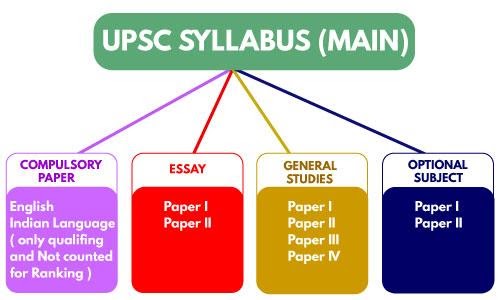
Now that UPSC preliminary examinations are over, lakhs of aspirants are waiting for results. Not all will qualify but for the handful that will, the struggle has only begun. UPSC Mains is the monster they have to defeat to secure a good rank and achieve their IAS dream. Given the vast upsc syllabus, this is not the time to be learning new things. Instead, it is now time to concentrate hard on revising and polishing off the knowledge you already possess. The time constraint means that there has to be an effective revision strategy. Today, we discuss a revision strategy that will for sure give your mains preparation an edge over others.

Upsc main syllabus

Keep the UPSC Syllabus In Mind

General Studies

General Studies is a common hurdle in both prelims and mains. However, the way you approach the topics is different. If you have planned your preparation right, there are a very few additions you now need to make to your General Studies knowledge. So concentrate on revision instead.

A good strategy is to immediately sit with the syllabus, and topic notes if you have them, and see what additions can be made and if any material can be added or updated to them. Once that is done, now devise a weekly plan on which sections you need to cover each week. You are no longer trying to deal with just facts, so start writing answers on each relevant topic that you come across in the news. And don’t forget to keep updating your study notes with the latest current affairs.

Ethics and Essays

Ethics Paper Analysis

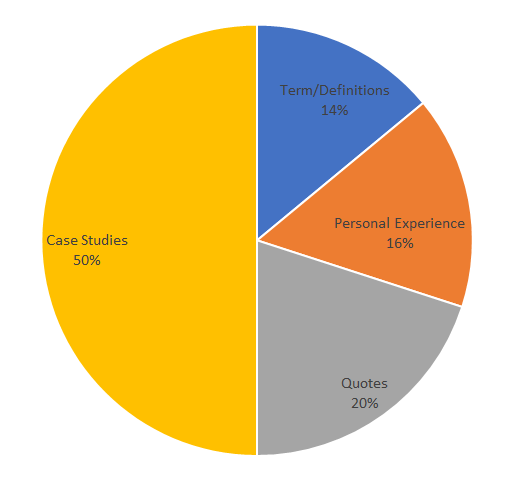
Average upsc aspirant would leave this to the last minute, but remember, your goal is to be above average. Try to write at least 3 essays and answer 3 case studies a week. Pick topics from previous year’s questions and ensure that you have a good grip over topics that are asked about frequently. Analyze the essays you write by comparing them with toppers' answers and improve your writing skills.

Writing at least 10-12 essays before the exam will give you the much-needed edge. Practicing enough case studies will ensure you write quality answers in the exam. Always remember that most UPSC aspirants who make it to the final list have similar scores in the first three GS papers. It is Essays and Ethics that decide who ranks on top.

Mains Optional

Start your optional revision from day one. Remember that the last time you read this material was probably 6 months ago and thus, it will take time to cover again. If you have some portion of the syllabus still incomplete, take a week right at the beginning, leaving aside the rest of the papers, and complete this first. Your optional can make or break your rank too.

For optional, writing is key. Update relevant topics with Current Affairs and make compact notes. You will most definitely need to make these connections in your exam paper, so start early. Make sure you have covered each topic in the syllabus and covered all PYQs of the last 10 years again.

Write, Write, Write

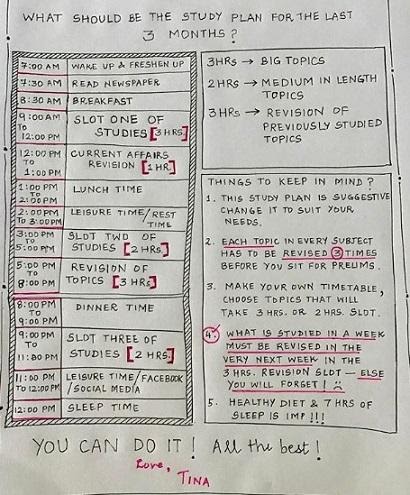
UPSC IAS (Prelims) 2020: Check Tina Dabi's (AIR 1) Study Plan & Preparation  Strategy for Last 3 Months Revision

Topper Tina Dabi’s (AIR-1, UPSC CSE 2016) Revision Strategy

And finally, the key to writing good answers is to keep on writing regularly. It may not be possible to take full tests regularly, given how long each paper is, but ensure you write answers daily. Keep 2-3 hours of your day aside for this. And full-fledged tests are important. Ensure that you take at least 3 tests for each of the GS papers. Similarly, try taking at least 2 Essay and Ethics tests. For optional, at least 3 tests are required to analyze your preparation. And this also helps you figure out your time management technique and answer all questions in each paper. 

Most importantly, don’t relax just yet. Keep pushing and working hard, and you will achieve your dream.

© IASEXAMPORTAL

CLICK HERE TO DOWNLOAD UPSC TOPPERS NOTES

UPSC Exam Complete Study Materials

Online Coaching for IAS PRELIMS Exam

<<Go Back To Main Page

(Download) UPPSC : Mains Exam Paper 2025 (Essay)


(Download)  UPPSC : Mains Exam Paper 2025 (Essay)


State: Uttar Pradesh (UPPSC)

Pages

Subscribe to RSS - trainee5's blog