Iasguru's blog

Weekly Current Affairs Update for IAS Exam VOL - 3 (16th December 2013 TO 22nd December 2013)


Weekly Current Affairs Update for IAS Exam

VOL - 3 (16th December 2013 TO 22nd December 2013)


Issue : VOL - 3 (16th December 2013 TO 22nd December 2013)

File Type: PDF ONLY "NO HARD COPY"

Click Here to Download Sample Material

Click Here to Buy VOL - 3 Full PDF

Click Here to Buy 1 Year Subscription - "Only PDF"

Covered Topics:


NATIONAL PORTAL OF INDIA

A GLINT OF INDIA

Particulars Description
Location The Indian peninsula is separated from mainland Asia by the Himalayas. The Country is surrounded by the Bay of Bengal in the east, the Arabian Sea in the west, and the Indian Ocean to the south.
Geographic Coordinates Lying entirely in the Northern Hemisphere, the Country extends between 8° 4' and 37° 6' latitudes north of the Equator, and 68° 7' and 97° 25' longitudes east of it.
Indian Standard Time GMT + 05:30
Area 3.3 Million sq. km
Telephone Country Code +91
Border Countries Afghanistan and Pakistan to the north-west; China, Bhutan and Nepal to the north; Myanmar to the east; and Bangladesh to the east of West Bengal. Sri Lanka is separated from India by a narrow channel of sea, formed by Palk Strait and the Gulf of Mannar.
Coastline 7,517 km encompassing the mainland, Lakshadweep Islands, and the Andaman & Nicobar Islands.
Climate The climate of India can broadly be classified as a tropical monsoon one. But, in spite of much of the northern part of India lying beyond the tropical zone, the entire country has a tropical climate marked by relatively high temperatures and dry winters. There are four seasons:
winter (December-February)  
summer (March-June)  
south-west monsoon season (June-September)  
post monsoon season (October-November)  
Terrain The mainland comprises of four regions, namely the great mountain zone, plains of the Ganga and the Indus, the desert region, and the southern peninsula.
Natural Resources Coal, iron ore, manganese ore, mica, bauxite, petroleum, titanium ore, chromite, natural gas, magnesite, limestone, arable land, dolomite, barytes, kaolin, gypsum, apatite, phosphorite, steatite, fluorite, etc.
Natural Hazards Monsoon floods, flash floods, earthquakes, droughts, and landslides.

UPSCPORTAL Daily Dose in Hindi (रोजाना समाचार, वस्तुनिष्ठ प्रश्न, ऑडियो नोट्स) "07 जनवरी, 2014"

UPSCPORTAL Daily Dose in Hindi

दैनिक खुराक (दैनिक समसामयिकी, वस्तुनिष्ठ प्रश्न, ऑडियो नोट्स) "07 जनवरी, 2014"

समसमायिक रोजाना ऑडियो नोट्स:

  • चर्चा का विषय: जी. एस. एल. वी. डी. 5, भारत के लिए बडी उपलब्धि
  • सहभागी: दिनेश सी. शर्मा(विज्ञान पत्रकार), विमान बासु(विज्ञान लेखक)

अधिक जानकारी के लिए यहां क्लिक करें

(Premium) Gist of Press Information Bureau: January 2014

Premium - Gist of Press Information Bureau: January 2014

COMMITTEES OF STATE FOOD SECRETARIES TO BE SET UP FOR SPEEDY IMPLEMENTATION OF FOOD SECURITY ACT

The Center has proposed a committee of State Food Secretaries under the chairmanship of Union Food Secretaries to short out issues of sharing expenditure towards intra-State transportation and handling of foodgrains, margins to fair price shop dealers and other implementation issues to ensure speedy implementation of National Food Security Act(NFSA).

Besides this another committee at the Ministerial level has been proposed to sort out issues of finance and other infrastructure to provide all required assistance on priority basis for the implementation of the Act. This was disclosed by Prof K.V.Thomas, Minister of Consumer Affairs, Food and Public Distribution to the media persons here today while briefing about the deliberations of the State Food Ministers’.

(Download) UPSC IAS Mains 2013 : Psychology Question Paper - 2

UPSC

(Download) UPSC Mains 2013 : Optional Question Paper

Psychology Paper II

Subject: Psychology Paper II

(Download) UPSC IAS Mains 2013 : Psychology Question Paper - 1

UPSC

(Download) UPSC Mains 2013 : Optional Question Paper

Psychology Paper I

Subject: Psychology Paper I

UPSCPORTAL Daily Dose in Hindi (रोजाना समाचार, वस्तुनिष्ठ प्रश्न, ऑडियो नोट्स) "06 जनवरी, 2014"

UPSCPORTAL Daily Dose in Hindi

दैनिक खुराक (दैनिक समसामयिकी, वस्तुनिष्ठ प्रश्न, ऑडियो नोट्स) "06 जनवरी, 2014"

समसमायिक रोजाना ऑडियो नोट्स:

  • चर्चा का विषय: बांग्लादेश में आम चुनाव
  • सहभागी: वीणा सिकरी (पूर्व कूटनीतिज्ञ), सिमरन सोढी (संपादक, विदेषी मामले, द स्टेट्समेन)

अधिक जानकारी के लिए यहां क्लिक करें

(Download) UPSC : IAS Main Indian Languages Exam Paper, 2013 - Maithili

UPSC

Civil Services (Main) Exam, 2013

(Download) UPSC Mains 2013 : Indian Languages (Compulsory)

Paper : Maithili

Subject: Maithili Paper I

File Size: 1.80 MB

File Type: Zipped PDF

(Download) UPSC : IAS Main Indian Languages Exam Paper, 2013 - Marathi

UPSC

Civil Services (Main) Exam, 2013

(Download) UPSC Mains 2013 : Indian Languages (Compulsory)

Paper : Marathi

Subject: Marathi Paper I

File Size: 1.70 MB

File Type: Zipped PDF

(Download) UPSC : IAS Main Indian Languages Exam Paper, 2013 - Oriya

UPSC

Civil Services (Main) Exam, 2013

(Download) UPSC Mains 2013 : Indian Languages (Compulsory)

Paper : Oriya

Subject: Oriya Paper I

File Size: 1.60 MB

File Type: Zipped PDF

(Download) UPSC : IAS Main Indian Languages Exam Paper, 2013 - Sanskrit

UPSC

Civil Services (Main) Exam, 2013

(Download) UPSC Mains 2013 : Indian Languages (Compulsory)

Paper : Sanskrit

Subject: Sanskrit Paper I

File Size: 1.60 MB

File Type: Zipped PDF

(Download) UPSC : IAS Main Indian Languages Exam Paper, 2013 - Kannada

UPSC

Civil Services (Main) Exam, 2013

(Download) UPSC Mains 2013 : Indian Languages (Compulsory)

Paper : Kannada

Subject: Kannada Paper I

File Size: 990 KB

File Type: Zipped PDF

(Download) UPSC : IAS Main Indian Languages Exam Paper, 2013 - Malayalam

UPSC

Civil Services (Main) Exam, 2013

(Download) UPSC Mains 2013 : Indian Languages (Compulsory)

Paper : Malayalam

Subject: Malayalam Paper I

File Size: 1.10 MB

File Type: Zipped PDF

(Download) UPSC : IAS Main Indian Languages Exam Paper, 2013 - Nepali

UPSC

Civil Services (Main) Exam, 2013

(Download) UPSC Mains 2013 : Indian Languages (Compulsory)

Paper : Nepali

Subject: Nepali Paper I

File Size: 2.00 MB

File Type: Zipped PDF

(Premium) Gist of Kurukshetra Magazine: January 2014

Premium - Gist of Kurukshetra Magazine: January 2014

NEW HOPE TO FIGHT HUNGER

The much awaited National Food Security Bill has been recently passed by voice vote the Parliament. It will ensure legal food entitlement to 75% of the rural population and 50% of the urban population across the country at reasonably cheaper price. The scheme provides for distribution of rice at Rs. 3 per kilogram, wheat at Rs. 2 and coarse grains at Re. 1 per person. From the date to be notified Government would provide 5 kg of food-grains per person per month to Priority households, and 35 kg per household per month to 25 million Antyodaya households.

The total number of Priority and Antyodaya household would be 75 per cent of the rural population and 50 per cent of the urban population, thus covering about 180 million households as against to only 100 million households right now. It is a welcome step and will reduce hunger and malnutrition in especially from the underprivileged class in urban and rural areas.

The history of the Food Security Legislation in India dates back to 1942 when the Public Distribution System (PDS) was evolved owing to shortage of food grains during World War II. The then government had started distributing food grains through PDS and the intervention had been continued in major cities and certain food deficient regions. However, the policy on PDS has been witnessed major changes with a universal approach in certain phases after independence. The Seventh Five Year Plan assigned the PDS a crucial role by bringing the entire population into its ambit and over the years. It evolved as an important government intervention towards ensuring availability of food-grains to the public at affordable prices as well as for tackling poverty However, a Targeted PDS (TPDS) for food-grains has been in place since 1997. Under the TPDS the quantum of provisioning of food-grains varies across Below Poverty Line (BPL) and Above Poverty Line (APL) households with different prices.

UPSCPORTAL Daily Dose in Hindi (रोजाना समाचार, वस्तुनिष्ठ प्रश्न, ऑडियो नोट्स) "04 जनवरी, 2014"

UPSCPORTAL Daily Dose in Hindi

दैनिक खुराक (दैनिक समसामयिकी, वस्तुनिष्ठ प्रश्न, ऑडियो नोट्स) "04 जनवरी, 2014"

समसमायिक रोजाना ऑडियो नोट्स:

  • चर्चा का विषय: प्रधानमंत्री की प्रेस वार्ता
  • सहभागी: प्रो0. अमरजीत सिंह नारंग (इग्नू), सुमित चक्रवर्ती (संपादक, द् मेन स्ट्रीम)

अधिक जानकारी के लिए यहां क्लिक करें

(News) Bihar CM Questions UPSC favouritism towards English Medium IAS Aspirants

Bihar CM Questions UPSC favouritism towards English Medium IAS Aspirants

Bihar Chief Minister Nitish Kumar on Saturday questioned the importance given to English in examinations conducted by the Union Public Service Commission (UPSC), as opposed to Indian languages.

(Premium) Gist of The Hindu: January 2014

Premium - Gist of The Hindu: January 2014

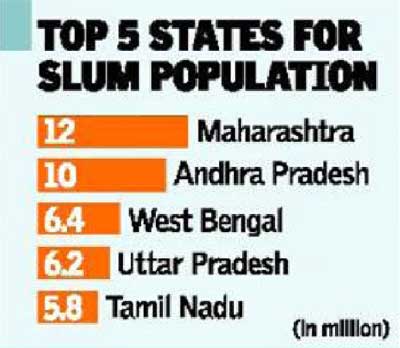
ARE WE LIVING IN A SLUM ERA

Newly released census data shows families living in slums have a far better child sex ratio than the urban Indian average. Over a third of India’s slum-dwellers live in unrecognised slums. Over 65 million people lived in slums in 2011, up by 25 per cent from 52 million in 2001, but slum populations have grown slower than the average urban population over the last decade. The average household living in a slum is no larger than an average urban Indian household, with 4.7 family members. The child sex ratio (0-6 years) of an average slum household is 922 girls for every 1,000 boys, compared to 905 for urban India.

Scheduled Castes (SCs) are over-represented in slums, with one out of every 5 slums residents belonging to SC, compared to just over one out of 10 for urban India as a whole. The proportion of SCs living in slums has risen over the last decade. They have far better sex ratios than other urban communities.

The literacy rate in slums is now up to 77.7% but still lags behind the urban average. Both men and women living in slums participate at a higher rate in the workforce than the urban average, even though fewer have employment through the year.

The census defines a slum as “residential areas where dwellings are unfit for human habitation” because they are dilapidated, cramped, poorly ventilated, unclean, or “any combination of these factors which are detrimental to the safety and health” and covers all 4,041 statutory towns in India.

(Download) UPSC : IAS Main Indian Languages Exam Paper, 2013 - Santhali

UPSC

Civil Services (Main) Exam, 2013

(Download) UPSC Mains 2013 : Indian Languages (Compulsory)

Paper : Santhali

Subject: Santhali Paper I

File Size: 1.90 MB

File Type: Zipped PDF

(Download) UPSC : IAS Main Indian Languages Exam Paper, 2013 - Urdu

UPSC

Civil Services (Main) Exam, 2013

(Download) UPSC Mains 2013 : Indian Languages (Compulsory)

Paper : Urdu

Subject: Urdu Paper I

File Size: 890 KB

File Type: Zipped PDF

(Download) UPSC : IAS Main Indian Languages Exam Paper, 2013 - Telugu

UPSC

Civil Services (Main) Exam, 2013

(Download) UPSC Mains 2013 : Indian Languages (Compulsory)

Paper : Telugu

Subject: Telugu Paper I

File Size: 1.90 MB

File Type: Zipped PDF

Pages

Subscribe to RSS - Iasguru's blog