The Gist of Yojana: September 2015
Yoga: Right Path to Health and Wellnes
Yoga is a spiritual discipline based on an extremely subtle
science, which focuses on bringing harmony between mind and body. It is an art
and science of healthy living. The holistic approach of Yoga is well established
and it brings harmony in all walks of life and thus, known for disease
prevention, health promotion and management of many lifestyle -related
disorders. The term ‘Yoga’ is derived from the Sanskrit root ‘Yuj’, meaning ‘to
join’ or ‘to yoke’ or ‘to unite’. As per Yogic scriptures, the practice of Yoga
leads to the union of individual consciousness with that of the Universal
Consciousness, indicating a perfect harmony between the mind and body, man and
nature. The aim of yoga is self-realization, to overcome all kinds of sufferings
leading to ‘the state of liberation’ (Moksha) or ‘freedom’(Kaivalya). Living
with freedom in all walks oflife, health and harmony are the main objectives of
yoga practice.
The number of seals and fossil remains of Indus Saraswati
Valley civilization with yogic motives and figures performing Yoga Sadhana
suggest the presence of yoga in ancient India. The phallic symbols, seals of
idols of mother Goddess are suggestive of Tantra Yoga. Presence of yoga is
available in folk traditions, Indus Saraswati valley civilization, Vedic and
Upanishadic heritage, Buddhist and Jain traditions, Darsh anas, epics of
Mahabharat including Bhagavadgeeta and Ramayana, theistic traditions of Shaivas,
Vaishnavas, and Tantric traditions. Though yoga was being practiced in the
pre-Vedic period, the great Sage Maharshi Patanjali systematized and codified
the then existing practices of Yoga, its meaning and its related knowledge
through his Yoga Sutras. After Patanjali, many Sages and Yoga Masters
contributed greatly for the preservation and development of the field through
their well documented practices and literature.
The widely practiced Yoga Sadhanas (Practices) are: Yama,
Niyama, Asana, Pranayama, Pratyahara, Dharana, Dhyana (Meditation), Samadhi /Samyama,
Bandhas & Mudras, Shat-karmas, Yukta-ahara, Yukta karma, Mantra japa, etc.
Yamas are restraints and Niyamas are observances. These are
considered to be pre-requisites for the Yoga Sadhanas (practices). Asanas,
capable of bringing about stability of body and - mind , consists in adopting
various body (psycho-physical) patterns, giving ability to maintain a body
position (a stable awareness of one’s structural existence) for a considerable
length and period of time as well. Asanas are widely practiced Yogic practices
for healthy living.
Pranayama consists of developing awareness of one’s breathing
followed by willful regulation of respiration as the functional or vital basis
of one’s existence. It helps in developing· awareness of one’s mind and helps .
to establish control over the mind. In the initial stages, this is done by
developing awareness of the ‘flow of in-breath and out-breath’ (svasa-prasvasa)
through nostrils, mouth and other body openings, its internal and external
pathways and destinations. Later, this phenomenan is modified, through
regulated, controlled and monitored inhalation (svasa) leading to the awareness
of the body space/s getting filled (puraka), the space/s remaning in a filled
state (kumbhaka) and it’s getting emptied (rechaka) during regulated, controlled
and monitored exhalation (prasvasa). Pratyhara indicates dissociation of one’s
consciousness (withdrawal) from the sense organs which help one .to remain
connected with the external objects. Dharana indicates broad based field of
attetion (inside the body and mind) which is usually understood as
concentration. Dhyana (Meditation) is contemplation (focussed attention inside
the body and mind) and Samadhi - integration.
Bandhas and Mudras are practices associated with pranayama.
They are viewed as (the) higher Yogic practices mainly consisting on adopting
certain body (psycho-physical) patterns along with (as well as) control over
respiration. This further facilitates control over mind and paves the way for
higher yogic attainment. Shat-karmas are de-toxification procedures, help to
remove the toxins acumalated in the body and are clinical in nature.
Yuktahara (Right Food and other inputs) advocates appropriate food and food
habits for healthy living. However, practice of Dhyana (Meditation) helping in
self-realization leading to transcendence is considered as the esssence of Yoga
Sadhana. However, ‘a judicious combination of practice of asana, pranayama and
dhyana daily, keep individuals healthy and disease free.
Using Yogic principles and practices for healing is called
“Yoga Therapy”. Use of Yoga practices for therapeutic purposes is a ‘by-product’
of Yoga. Yogic Practices are mind centric and if we examine different references
of Yoga, e.g. Upanishads, Gita, Yoga Sutra, classical Hatha Yoga texts or any
other yogic texts, it is clear that Yoga is a discipline aimed for freedom of
mind and its different faculties. The Mind, which is an instrument of
perception, is used to ‘transcend’ itself to give the perceiver clarity about
its position. Though, there is no reference of yogic tools available directly
dealing with illness in the Yoga Sutra of Patanjali, the word “Vyadhi” which
means illness is given as one of the “antardya-s” (obstacles) (Chapter 1 Sutra
30). There are of course, direct references available to show how Kriyas, Asanas,
Pranayamas and Mudras can be used to cure illnesses in Hatha Yoga Texts such as
Hatha-yoga pradipika, GherandaSamhita, Yoga Yajnavalkya Samhita, Yoga Rahasya,
etc. It is over the years, Yogdcdrya-s have developed the systems of Yoga for
therapy purposes. They are passed on to their disciple and practiced as
‘Traditions of Yoga Therapy’.
The Yoga Therapy: Doctrines and Concepts
- Doctrine of “Chitta-vrittinirodha”, “Kriyayoga” and “Astanga” as found
in Patanjal’s Yoga Sutras.
- Doctrine of “Panch ako sh a” (five sheathslbodies) as found in
Upanishads.
- Doctrine of various kinds of “Shuddhi” found in Patanjali Yoga Sutra and
Hathayoga.
- Doctrine of opening blocked channels of vayus and prana (nadishuddhi),
opening of lotuses and chakras, pranayamas, mudras and dristis as found in
Hathayoga and Kundalini Yoga.
- Working with the mind on the lines of Patanjali Yoga Sutra, Mantra Yoga
and Hathayoga.
- Working on the lines of “Karm a-Jn ana-Bhakti” from Bhagawadgita.
- Certain aspects of Tantra Yoga also get integrated in various Yoga
practices.
Yoga therapy is being practiced now as an alternative
healthcare practice in many parts of the world. The number of Yoga practitioners
continues to rise tremendously. Of the many benefits ascribed to Yoga practice,
blood pressure control is among the most studied. Yoga therapy has also been
found to improve indices of risk in adults with type 2 diabetes, including
glucose tolerance and insulin sensitivity, lipid profiles, anthropometric
characteristics and blood pressure. It also leads to a reduction in oxidative
damage; improve coagulation profiles and pulmonary function, and decreases
sympathetic activation in adults with diabetes and related chronic disorders.
Yoga may also be useful in reducing medication requirements in patients with
diabetes and could help prevent and manage cardiovascular complications in this
population.





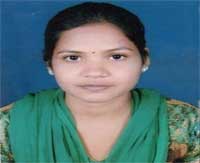 A
24-year-old girl of the district has secured 13th position in the Indian
Economic Service (IES) examination conducted by the UPSC.
A
24-year-old girl of the district has secured 13th position in the Indian
Economic Service (IES) examination conducted by the UPSC. Ira
Singhal, who topped the civil services examination, has been given home
cadre--union territories--to work as Indian Administrative Service (IAS)
officer.
Ira
Singhal, who topped the civil services examination, has been given home
cadre--union territories--to work as Indian Administrative Service (IAS)
officer.
 Far
from the lofty beginning of being espoused as the steel frame of the country,
representing the essential spirit of the Indian nation—unity in diversity—the
years since Independence have been marked by a steady deterioration of the
Indian Administrative Service (IAS). According to a recent survey of the
bureaucracies of 12 Asian economies, India’s “suffocating bureaucracy” has been
ranked as the least-efficient, and working with the country’s civil servants is
described as a “slow and painful” process. Indian bureaucrats are said to be
power centres in their own right, both at the national and state levels, and are
quite resistant to reforms that affect them or the way they go about discharging
their duties.
Far
from the lofty beginning of being espoused as the steel frame of the country,
representing the essential spirit of the Indian nation—unity in diversity—the
years since Independence have been marked by a steady deterioration of the
Indian Administrative Service (IAS). According to a recent survey of the
bureaucracies of 12 Asian economies, India’s “suffocating bureaucracy” has been
ranked as the least-efficient, and working with the country’s civil servants is
described as a “slow and painful” process. Indian bureaucrats are said to be
power centres in their own right, both at the national and state levels, and are
quite resistant to reforms that affect them or the way they go about discharging
their duties.