Iasguru's blog

(Walk In) Interview for JRF at University of Calcutta : 2011

Walk In Interview for Junior Research Fellow at University of Calcutta : 2011

Applications are invited to appear for a walk-in-interview for one post of Junior Research Fellow in the Tea Board, Ministry of Commerce and Industry, Govt. of India sponsored project entitled “Evaluation of the health beneficiary effects of tea products and modulatory role of tea flavonoids on emphysematous lung damage for the formulation of a high potency tea tablet’ in the room of the Head & Coordinator of Department of Biotechnology &
Dr. B. C. Guha Centre for Genetic Engineering and Biotechnology, University College of Science, 35 Ballygunge Circular Road, Kolkata 700019 on 10th, February, 2011 at 12.00 P.M.

Essential qualifications:

First class M. Sc. in any branch of life sciences with NET/GATE qualification.

Emoluments:

as per norms of Tea Board, Ministry of Commerce and Industry, Govt. of India The appointment would be initially for one year renewable every year based on performance.

NOTE:

  • Candidates are requested to bring two sets of complete applications on plain paper furnishing bio-data and copies of attested certificates along with originals (for verification) on the date of the interview.
  • No TA/DA is admissible for candidates appearing for the interview.

(Fellowship) IIT Madras Summer Fellowship Programme : 2011

IIT Madras Summer Fellowship Programme : 2011

Scholarship Description:

The IITM  Summer Fellowship Programme of two months with stipend is designed to enhance awareness and interest in high quality academic research among young Engineering, Management, Sciences and Humanities students through a goal oriented summer mini project undertaken at the Indian Institute of Technology Madras.

Eligibility:

Candidates pursuing third year of B.E./B.Tech./B.Sc.(Engg)/Integrated M.E./M.Tech. programme, first year of ME/M.Tech/M.Sc./M.A, MBA with outstanding academic background in terms of high ranks in university examinations are encouraged to apply, highlighting their academic performance and achievement including papers presented at seminars, projects executed, design contests participated, score/rank in Mathematics
Olympiad and any other awards/distinctions obtained.

Note: IIT students are not eligible to apply

Period of the Project:

The contact period for the project will be two months normally during 16 th May - 15 th July 2011. However depending on the convenience, the selected candidates can undertake the project at any time subject to the availability of faculty.

Stipend:

A sum of Rs.6,500/ (maximum) will be given as a stipend for a total period of 2 months.

Important Instructions:

The filled up application form along with the enclosures:

  • Original Study certificate from the Head of the Institution
  • Attested Photocopies of the Marks cards issued by the University
  • Attested Photocopies of the Rank certificates, papers presented, design contests participated, projects executed, score /rank in Mathematics Olympiad, any other awards/distinctions obtained etc.
  • Two page write‐up on the intended project work at IITM.

Scholarship Application Deadline: 18 February 2011

(Syllabus) RPSC: Syllabus For Post of Legal Assistant: Competitive Examination

Rajasthan Public Service Commission

Syllabus For Post of Legal Assistant: Competitive Examination

The competitive examination shall include the following papers and each paper shall carry the number of marks as shown against each :-

Paper I Constitution of India with special emphasis on Fundamental Rights, Directive Principles and enforcement of rights through writs, Functioning of High Courts and Supreme Court and attorney General. 50 Marks
Paper II Civil Procedure Code and Criminal, Procedure Code. Provisions required to be referred generally in Government Offices will be given importance. 50 Marks
Paper III Evidence Act, Limitation Act, Interpretation of Statutes, drafting and convincing. 50 Marks
Paper IV Language :- Part-A General Hindi
Part-B General English
25 Marks
25 Marks

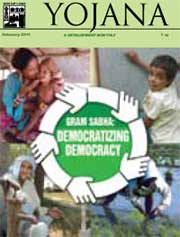
(Magazine) Yojana Magazine: Issue February 2011

Yojana Magazine: Issue February 2011

About the Issue :

The year 2009 marked fifty years since Nagaur in Rajasthan saw the foundations of Panchayati Raj institutions being laid in India. Fifty long years in which this institution has grown from strength to strength, bringing a large community of hitherto left-out people into the folds of governance. Fifty long years in which the common Indian from the remotest corner of the country has proved that he knows what is best for himself, his family and society, and that given a little support, he can think, decide and act for the collective good of his community. Fifty long years that have helped us rediscover the collective strength of the people at the grassroots after we almost lost it under the torturous period of subjugation by the British. Observing the year 2009-10 as the Year of the Gram Sabha was a reconfirmation of this strength of the people.

(Syllabus) PSYCHOLOGY - UPSC MAINS EXAM 2011

https://iasexamportal.com/images/upsc.JPG

Union Public Service Commission

SYLLABI FOR THE EXAMINATION PART-B
MAIN EXAMINATION

PSYCHOLOGY

PAPER - I

Foundations of Psychology
1. Introduction: Definition of Psychology; Historical antecedents of Psychology and trends in the 21st century; Psychology and scientific methods; Psychology in relation to other social sciences and natural sciences; Application of Psychology to societal problems.

2. Methods of Psychology: Types of research: Descriptive, evaluative, diagnostic and prognostic; Methods of Research: Survey, observation, case-study and experiments; Characteristics of experimental design and non- xperimental design, Quasi-experimental designs; Focussed group discussions, brain storming, grounded theory approach.

3. Research Methods: Major steps in Psychological research (problem statement, hypothesis formulation, research designs, sampling, tools of data collection, analysis and interpretation and report writing) Fundamental versus applied research; Methods of data collection (interview, observation, questionnaire); Research designs (ex-post facto and experimental); Application of statistical technique (t - test, two way ANOVA correlation, regression and factor analysis); Item response theory.

4. Development of Human Behaviour: Growth and development; Principles of development, Role of genetic and environmental factors in determining human behaviour; Influence of cultural factors in socialization; Life span development - Characteristics, development tasks, promoting psychological well-being across major stages of the life span.

5. Sensation, Attention and Perception: Sensation: concepts of threshold, absolute and difference thresholds, signal-detection and vigilance; Factors influencing attention including set and characteristics of stimulus; Definition and concept of perception, biological factors in perception; Perceptual organization-influence of past experiences, perceptual defence-factors influencing space and depth perception, size Z estimation and perceptual readiness; The plasticity of perception; Extrasensory perception; Culture and perception, Subliminal perception.

6. Learning: Concept and theories of learning (Behaviourists, Gestaltalist and Information processing models); The Processes of extinction, discrimination and generalization; Programmed learning, probability learning, self- nstructional learning, concepts; Types and the schedules of reinforcement, escape, avoidance and punishment, modeling and social learning.

7. Memory: Encoding and remembering; Short term memory, Long term memory, Sensory memory, Iconic memory, Echoic memory: The Multistore model, levels of processing; Organization and Mnemonic techniques to improve memory; Theories of forgetting: decay, interference and retrieval failure: Metamemory; Amnesia: Anterograde and retrograde.

8. Stupid Thinking and Problem Solving: Piaget’s theory of cognitive development; Concept formation processes; Information processing, Reasoning and problem solving, Facilitating and hindering factors in problem solving, Methods of problem solving: Creative thinking and fostering creativity; Factors influencing decision making and judgment; Recent trends.

9. Motivation and Emotional Pervert: Psychological and physiological basis of motivation and emotion; Measurement of motivation and emotion; Effects of motivation and emotion on behaviour; Extrinsic and intrinsic motivation; Factors influencing intrinsic motivation; Emotional competence and the related issues.

10. Intelligence and Aptitude: Concept of intelligence and aptitude, Nature and theories of intelligence - Spearman, Thurstone, Gullford Vernon, Sternberg and J.P; Das; Emotional Intelligence, Social intelligence, measurement of intelligence and aptitudes, concept of IQ, deviation IQ, constancy of IQ; Measurement of multiple intelligence; Fluid intelligence and crystallized intelligence.

11. Personality: Definition and concept of personality; Theories of personality (psychoanalytical, sociocultural, interpersonal, developmental, humanistic, behaviouristic, trait and type approaches); Measurement of personality (projective tests, pencil-paper test); The Indian approach to personality; Training for personality development; Latest approaches like big 5 factor theory; The notion of self in different traditions.

12. Attitudes, Values and Interests: Definition of attitudes, values and interests; Components of attitudes; Formation and maintenance of attitudes; Measurement of attitudes, values and interests; Theories of attitude change; Strategies for fostering values; Formation of stereotypes and prejudices; Changing others behaviour; Theories of attribution; Recent trends.

13. Language and Communication: Human language - Properties, structure and linguistic hierarchy, Language acquisition- predisposition, critical period hypothesis; Theories of language development - Skinner and Chomsky; Process and types of communication - effective communication training.

14. Issues and Perspectives in Modern Contemporary Psychology: Computer application in the psychological laboratory and psychological testing; Artificial intelligence; Psychocybernetics; Study of consciousness-sleep- ake schedules; dreams, stimulus deprivation, meditation, hypnotic/drug induced states; Extrasensory perception; Intersensory perception Simulation studies.

(Fellowship) Applications Invited for Fulbright Fellowship Program

Applications Invited for Fulbright Program

Since its inception in 1950, the United States-India Educational Foundation (USIEF) has awarded over 4,550 Fulbright grants to Indians in almost every field of academic endeavor. USIEF's grants are for leadership development in three main sectors: research; lecturing to promote mutual understanding in area studies (both American and Indian) as well as in areas of contemporary relevance to the U.S. and India; and professional training in newly emerging areas of importance to India such as environmental sciences and agriculture.

Fulbright Program Opportunities in the U.S. for Indians:

ince its inception, USIEF has awarded approximately 2,800 Fulbright grants to U.S. citizens in almost every field of academic endeavor. USIEF's grants are for leadership development in three main sectors: research; lecturing to promote mutual understanding in area studies (both American and Indian) as well as in areas of contemporary relevance to the U.S. and India; and professional training in newly emerging areas of importance to India such as environmental sciences and agriculture. USIEF continues to promote several Fulbright Muslim outreach initiatives by placing U.S. Fulbright scholars at leading Muslim institutions in India.

(Syllabus) RPSC: Syllabus For Post of College Lecturer: Law

Rajasthan Public Service Commission

Syllabus For Post of College Lecturer: Law

UNIT-I : Jurisprudence and Public Law :

(a) Jurisprudence - Meaning, Nature, Scope, Sources, Schools and Concepts.
(b) Constitutional Law - Preamble, fundamental Rights and Duties, Directive principles, President and his powers, The Union & the State Judiciary, Legislative Relations between the Union and the States, Services under the Union and States, Emergency provisions and amendment of the Constitution.
(c) Administrative Law - Nature and Growth, principles of Natural Justice, Judicial Review, administrative Tribunals, Delegated legislation, Lokayukta and Lokpal.

(Syllabus) RPSC: Syllabus For Post of College Lecturer: Music

Rajasthan Public Service Commission

Syllabus For Post of College Lecturer: Music

UNIT-I:

  1. Define Nad, Shruti, Swar, Saptak & Swarsthan according to ancient to Modern Music Scholars.
  2. General idea regarding Varna, lakshan-geet Kaku, Gram, Moorchhana, Rag, Jati, Prabhandh and dhatu, alapti, ashray rag, Rag lakshan, Swasthan - niyam, Alpatva - Bahutva, Aavirbhav - Tirobhav etc.
  3. 'That' and its importance in music. Classification and construction of 'That' according to Pt. Bhatkhande and Pt. Vayankat Makhi.
  4. Raga - Evolution & development.
  5. Define Rag Vargikaran and Samay-sidhant.
  6. Scale - Hindustani & Western - Comparative study. General Knowledge about Diatonic Chromatic and equally tempered Scale.

(Syllabus) RPSC: Syllabus For Post of College Lecturer: Drawing & Painting

Rajasthan Public Service Commission

Syllabus For Post of College Lecturer: Drawing & Painting

Unit-I

  • Fundamental of Art :-Definitions of Art & Meaning, Classification of Art (Fine Art & Performing Art), Importance of Art, Creative Process (Observation, Perception, Imagination), Subject and Subject Matter, Folk and Tribal Art.

Unit - II

  • Elements of Painting :- Line, Form, Colour, Tone, Texture, Space, Principle of Composition – Unity, Harmony, Balance, Emphasis or dominance, Rhythm, Proportion and Perspective, Six Canons of Indian Painting.

(Syllabus) RPSC: Syllabus For Post of College Lecturer: Economic Administration & Financial Management

Rajasthan Public Service Commission

Syllabus For Post of College Lecturer: Economic Administration & Financial Management

Unit – I Theory of Economics & Growth:

  • Nature and Scope of Micro and Macro economics; Theory of Firm; Consumer behaviour; Demand Analysis; Pricing under various market conditions; Production theory; Distribution theory; Theories of Growth and Development.
  • National Income; Business cycles, inflation, Consumption and Investment function.

Unit – II Financial Management:

  • Theory of Business Finance; Profit maximisation v/s Wealth maximisation, Capital Budgeting; Cost of Capital; Working Capital Management, Capital structure; Operating and Financial leverages. Funds Flow and Cash flow analysis.
  • Management of Financial Institutions; Development Banking.

(Syllabus) RPSC: Syllabus For Post of College Lecturer: Business Administration

Rajasthan Public Service Commission

Syllabus For Post of College Lecturer: Business Administration

UNIT-I:

  • Development of Management Thoughts
  • Strategic Management Process
  • Organisation change and Resistance - Management of Change.
  • Organisation Development, Culture, Ethos and Climate.
  • Management Effectiveness.
  • Total Quality Management (TQM)
  • Emerging dimensions of Management.

UNIT-II:

  • Marketing Concept and Environment.
  • Brand name, trade mark, Patents and Copyright.
  • Price Management.
  • Distribution Channels , Components of Promotion Mix.
  • Marketing Organisations, Social, legal and ethical aspects of marketing.
  • Service Marketing.
  • Industrial Marketing.

(Syllabus) RPSC: Syllabus For Post of College Lecturer: Accountancy and Business Statistics

Rajasthan Public Service Commission

Syllabus For Post of College Lecturer: Accountancy and Business Statistics

A. Financial Accounting:

Issue, forfeiture and redemption of Shares & Debentures; Buy back of Shares; Amalgamation, Absorption and Reconstruction (internal & external); Accounting for Holding Companies, Provisions of section 212, Preparation of consolidated Balance Sheet; Concept and determination of Economic Value Added (EVA); Human Resource Accounting.

B. Cost Accounting:

Concept of Cost Control – Standard Costing, Ascertainment of Variances, Modalities of investigation of Variances; Budgetary Control; Marginal Costing and Break-even Analysis; Cost reduction and Value Analysis; Activity Based Costing – its application and limitations.

C. Taxation and Auditing:

Income Tax Law and Rules with reference to assessment of Companies, advance payment of tax, tax deduction at source, refund of tax; Value Added Tax.
Audit of Companies, Appointment, Rights, Duties and Liabilities of Auditor; Management audit – Performance and Efficiency Audit; Cost Audit.

(Syllabus) RPSC: Syllabus For Post of College Lecturer: Geology

Rajasthan Public Service Commission

Syllabus For Post of College Lecturer: Geology

Unit – I

Physical Geology; Geomorphology; Aerial Photography and land sat imageries. Use of Remote Sensing in Geology; Structural Geology . Landscape and sea floor morphology . Our Solar system . Major processes of weathering, erosion, transportation and deposition and structure resulted out of them. Evolution of major landform features in arid zones.
Use of Remote sensing in geological studies .
Concept of strain analysis in rocks, planar & linear structures; classification of folds, faults and joints . Outcrop patterns and geometry of superposed folding.
Shear zones and thrust tectonics.

(Syllabus) RPSC: Syllabus For Post of College Lecturer: Mathematics

Rajasthan Public Service Commission

Syllabus For Post of College Lecturer: Mathematics

1. Advanced Abstract Algebra :

Groups – Normal Sub-groups, Quotent groups, Homomorphism, Isomorphism of groups. Class equation for finite groups. Cauchy's Theorem for finite obelion groups, P-groups, Solvable groups, Jordan Holder Theorem, Nilpotent groups, Ring morphism, Principal Ideal domain, Euclidean Rings, Polynomial rings, Modules, Sub modules, Quotent modules, Simple modules, Semi-simple modules and Free modules.

2. Real Analysis :

Continuity, uniform continuity, Differentiability, Mean value theorems, Sequence and Series, Uniform Convergence, Riemann Integral, Measurable sets, Lebesgue outer measure, Borel and Lebesgue measurability, Non measurable sets, Countable and Non countable sets.

3. Complex Analysis :

Analytic Functions, Cauchy's Theorem, Cauchy's Integral Formulae, Power Series, Laurent's Series, Singularities, Theory of Residues, conformal mappings, Fractional and Bilineor Transformations, Meromorphic Functions, The Residue Theorem, Contour Integration.

(Syllabus) RPSC: Syllabus For Post of College Lecturer: Zoology

Rajasthan Public Service Commission

Syllabus For Post of College Lecturer: Zoology

  1. Taxonomy – Principles and basis of classification, Binomial system of nomenclature. General survey of animal kingdom, classification upto order and relationship of the various phyla.
  2. Study of structure and life cycle of following representations of various phyla.
    (a) Protozoa: Paramecium, Monocystis, Plasmodium, Euglena, Trypanosoma and Leishmania, Protozoa and diseases. Locomotion and reproduction in protozoa.
    (b) Porifera: Sycon, Canal system and skeleton in Porifera.
    (c) Coelenterata: Obelia and Aurelia; polymorphism in Hydrozoa; coral formation; metagenesis.
    (d) Helminths: Planaria, Fasciola and Taeniea, Ascaris, Parasitic-adaptations and evolution of parasitism.
    (e) Annelida: Nereis & Pheretema, Hirudo.
    (f) Arthropoda: Palaemon, Palamnaeus, Limulus, Periplanata, Musca and Anopheles, Larval Forms and parasitism in Crustacea. Mouth parts, vision and respiration in arthropods; social life and metamorphosis in insects.
    (g) Mollusca: Unio, Pila and Sepia.
    (h) Echinodermata: Starfish. Larval forms of Echinodermata. Phylogenetic relationships between invertebrate larvae.
  3. Structural organization of the following chordate types-Balanoglossus, Herdamania, Branchiostoma, Scoliodon, wallago, Rana, Varanus, Columba Rabbit.

(Syllabus) RPSC: Syllabus For Post of College Lecturer: Botany

Rajasthan Public Service Commission

Syllabus For Post of College Lecturer: Botany

  1. Algae in diversified habitats (Terrestrial, fresh water, marine); Thallus organization, Cell structure and reproduction; criteria in classification of Algae; Economic Importance of Algae.
  2. General characteristic of Fungi, Cell ultra structure, cell wall compostion, reproduction, hatrothallism, parasexuality, recent trends in classification, economic importance of fungi, mycorrhizae and lichens.
  3. Archaebacteria, eubacteria and cyanobacteria, ultra structure and reproduction, Prions, L-Forms, Viriordes, characteristics and ultra structure of virions, Mycoplasma and Phytoplasma - General characterisaiton and role in causing planet diseases, microbiology of water, air, soil and revenge
  4. General account of diseases caused by plant pathogens, molecular basis of host parasite interaction, pathogen attack and defence mechanism, diseases of important field crops of Rajasthan (Red rot of Sugar cane, rust of wheat, covered smart of wheat, loose smart of wheat, green ear disease of bazra, leaf sport and smart of jawar ergot and smart of bazra, root knot and rot diseases of vegetables); diseases management, role of nformation technology.

(Syllabus) RPSC: Syllabus For Post of College Lecturer: Chemistry

Rajasthan Public Service Commission

Syllabus For Post of College Lecturer: Chemistry

  1. Theories of Chemical Bonding: LCAO, types of molecular orbitals, molecular orbital diagrams of homo and heteronuclear (diatomic and polyatomic) molecules.
  2. Transition metal chemistry: Electronic configuration, variable oxidation states, magnetic properties, charge transfer spectra, metal atom clusters, stereochemistry of co-ordination compounds, their IUPAC names, metal-ligand bonding. Ligand field theory of Complexes, high and low spin complexes, CSFE, John-Teller effect, spectral and magnetic properties of complexes.
  3. Lanthanides and actinides: Electronic configuration, magnetic and spectral properties, lanthanide and actinide contraction, oxidation states, super heavy elements.
  4. Chemistry of non-transition elements: Preparation, properties and bonding in diborane and higher boranes, polyhedral borane anions and carboranes, Borazines. Silicones and silicates (Structure and applications in industry and technology), phosphonitrilic compounds, interhalogen compounds, compounds of xenon and their structures.
  5. Non-aqueous solvents: Reactions in liquid sulphur dioxide, liquid ammonia and hydrogen fluoride. Uses of solvents like DMSO, THF and DMF.
  6. Organometallic Chemistry of transition elements: Synthesis, Structure and bonding, homogeneous catalytic reactions, hydgrogenation, hydroformylation, isomerisation, polymerisation.

(Syllabus) RPSC: Syllabus For Post of College Lecturer: Home Science (Home Management)

Rajasthan Public Service Commission

Syllabus For Post of College Lecturer: Home Science (Home Management)

UNIT-I: Concept of Management -

  1. Principles and Practices of Management. - Concepts, Principals, Objective and techniques of management. Evolution of management thought.
  2. System Approach.
  3. Management Process - Planning, Controlling, evaluating.
  4. Motivating forces of management - values, goals, standards and their interrelations.
  5. Decision making - steps in decision - making, types, methods of resolving conflicts.
  6. Resources : Types, Characteristics.
  7. Time, Energy and Money management.

(Syllabus) RPSC: Syllabus For Post of College Lecturer: Home Science (Food & Nutrition)

Rajasthan Public Service Commission

Syllabus For Post of College Lecturer: Home Science (Food & Nutrition)

UNIT I - Food Science Processing & Technology

Properties of different foods. Physical & chemical changes in foods during processing including cooking and preservation with special reference to sensory characteristics and nutritional value. Effect of acid and alkali on foods. Traditional methods of food processing - steaming, parboiling, germination - malting, fermentation, supplementation and their nutritional advantages. Newer methods of processing - enrichment, fortification, microwave and extrusion cooking and their nutritional advantages. Food additives, enzymes and pigments. Food labeling and packaging. Product development and significance of value added products. Natural, microbial and chemical toxicants, pesticide residues, common adultrants and mycotoxins and antinutritional factors in foods, their harmful effects on health and methods of eliminating them. Food spoilage and its prevention. Quality assurance, food laws and standards.

UNIT II - Macro Nutrients

Carbohydrates, lipids, protein, - their digestion, absorption, chemistry, functions, sources, requirements and effects of deficiency and excess. Methods of assessing requirements of energy and other nutrients. Qualitative differences in food proteins and methods of assessing protein quality. Importance of fibre in human nutrition. Water balance. Metabolism of carbohydrates, protein and lipids.

(JOBS) WBPSC: Bengali Translator Recruitment Examination, 2011

Public Service Commission, West Bengal

Bengali Translator Recruitment Examination, 2011

Advertisement No 01/2011

Applications from Indian citizens or such other nationalities as are declared eligible by the Govt. of India in the prescribed format are invited for the aforesaid competitive recruitment examination which will be held in two successive stages, viz., (1) Written Examination and (2) Viva voce test. The Written Examination will be held in Kolkata only in April, 2011 or thereabout. The viva voce test of candidates to be selected on the results of the Written Examination will be held in Commission’s office in Kolkata.

Number of Posts:

  • 2 [ Unreserved – 1, BC (Category - B) – 1 ]

Pay Scale:

  • (PB-4) Rs.9,000-40,500/- + Grade Pay of Rs.4,400/-. Gross emoluments at the entry level : Rs.13,400/- per month. Besides D.A., M.A. and H.R.A. admissible as per rules.

Pages

Subscribe to RSS - Iasguru's blog